
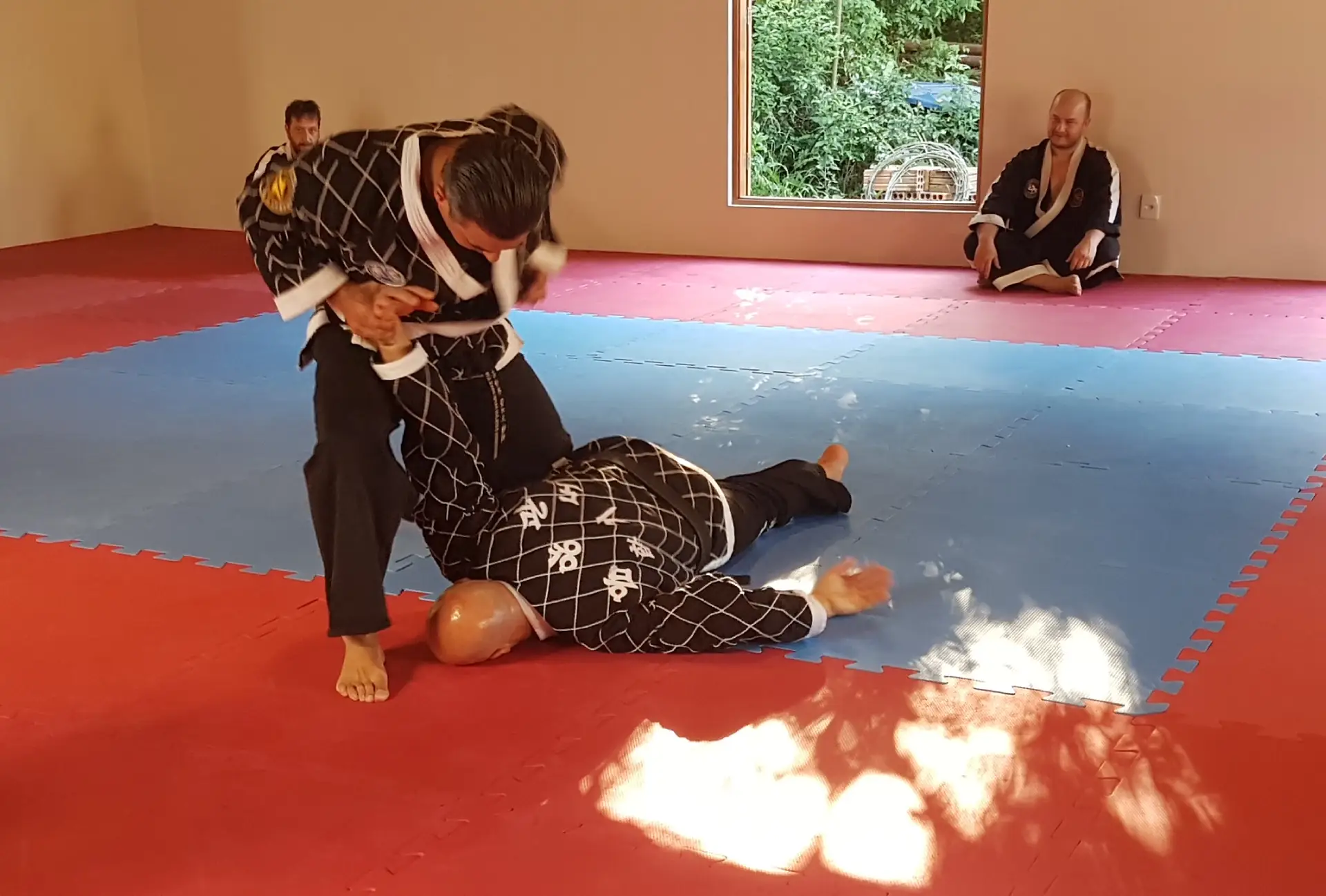
When people first hear about Kempo (sometimes spelled Kenpo), they often wonder — is it like karate? Is it kung fu? The truth is, Kempo is both and neither. It’s a hybrid martial art designed to be flexible, practical, and always evolving — just like its students.
Where Kempo Comes From
The word “Kempo” (拳法) literally means “law of the fist” in Japanese. Kempo has roots in both Chinese martial arts (brought to Okinawa and Japan by traveling monks and traders) and Japanese/Okinawan striking arts. The result is a martial art that combines:
-
Linear movements and strong stances (similar to karate)
-
Circular techniques and fluid transitions (inspired by kung fu)
-
Practical self-defense applications that adapt to real-world situations
Modern Kempo, particularly American Kenpo (popularized by Ed Parker in the 20th century), was designed to be street-smart — fast, efficient, and adaptable rather than locked into tradition.
What Makes Kempo Different
- Speed and Flow: Instead of single strikes, Kempo uses rapid-fire combinations that overwhelm an opponent.
- Adaptability: Techniques are taught as principles, not just rigid forms, so practitioners can adjust to size, strength, or changing circumstances.
- Close-Range Fighting: While many arts emphasize long-distance kicks, Kempo specializes in in-fighting — elbows, knees, quick strikes, and joint locks.
- Blending Strikes and Grappling: Kempo doesn’t just punch and kick — it includes sweeps, throws, and takedowns when needed.
How Kempo Is Practiced
Training in Kempo often includes:
-
Basics (Kihon): Stances, blocks, strikes, and footwork fundamentals.
-
Self-Defense Techniques: Pre-arranged scenarios teaching how to counter grabs, punches, or multiple attackers.
-
Kata/Forms: Sequences that combine offensive and defensive moves to teach balance, power, and memory.
-
Sparring: Controlled practice to test timing, speed, and distance against real resistance.
-
Conditioning: Developing speed, flexibility, and endurance to make techniques more effective.
Why People Train in Kempo
-
Practical Self-Defense: The art is designed to work in unpredictable, real-life encounters — not just tournaments.
-
Confidence and Awareness: Students learn to stay calm under pressure and assess situations quickly.
-
Physical Fitness: The fast-paced drills build cardiovascular health, strength, and coordination.
-
Personal Development: Like many martial arts, Kempo emphasizes discipline, respect, and continuous self-improvement.
Modern Kempo Around the World
Today, Kempo is practiced worldwide in many variations — American Kenpo, Shaolin Kempo, Kajukenbo (a Hawaiian hybrid art with Kempo roots), and others. Though different schools may emphasize different techniques, the spirit of Kempo remains: adapt to survive, learn to thrive.
A Martial Art That Evolves With You
Unlike arts that stay rooted in strict tradition, Kempo embraces evolution. As one Kempo saying goes:
“Do not follow in the footsteps of the masters — seek what they sought.”
If you’re looking for a martial art that’s powerful, flexible, and practical for self-defense in the modern world, Kempo is an excellent path to explore.
0 Comments